Showing posts with label Watson Honanie hopi jewelry. Show all posts

Wednesday, 27 March 2019

Interesting Facts About Watson Honanie Hopi Jewelry


Thousands of years ago, Paleo-Indians began making ornaments out of the available materials their tribes had, and the tradition continues today. They continue transforming gemstones and precious metals into wearable pieces of jewelry that are sought after by collectors and Native American art enthusiasts. One of the popular names in this industry is Watson Honanie Hopi from the Bear clan, who is known for his stunning silverworks.

Watson started at an early age because of an  influence of his uncles in the Hopi Silvercraft Guild, who are Fred Kabotie and Porter Timecheand. His brother, Phillip, taught him the overlay technique.

What sets apart Watson Honanie Hopi's jewelry pieces from others are the images they depict. Most of his works portray the culture and tradition of the Hopi village and its tribal clans. You will notice that the expertly cut petroglyph images show ceremonial dancers, kachinas belief, and animals. His contribution to the development of gold overlay techniques has made him a famous innovator.

He sometimes incorporates stones and gemstones such as diamond and turquoise to make his pieces more alluring and unique. Though he is known for gold overlay, he also uses sterling silver in handcrafting rings, bracelets, pendants, and other types of jewelry. In fact, some of his pieces today have gold and silver overlay.

Watson Honanie Jewelry has won many awards at the prestigious Santa Fe Indian Market. He received the Best of Division for his concho belt, which incorporated three types of materials, namely coral, gold, and silver. He also received Best of Class in the same event.
It can be difficult to find a Watson Honanie Hopi piece as some of his works are displayed in galleries across the country, but collectors can still buy them. They are carried by exclusive jewelry shops that specialize in Native American jewelry.

Wednesday, 23 November 2016

Buy Exquisite Jewelry Online Designed by Andy Cadman

Coming from a family of artists, Andy Cadman began his career by making intricately stamped traditional Native American jewelry in his early 20s. He was initially known as the half-brother of Sunshine and Gary Reeves and the older brother of Darrel Cadman, but he began to make a name for himself by creating pieces that feature gem grade natural turquoise and sterling silver. His unique designs are considered world class with their fine and heavy stamp work. He produces jewelry in limited quantities, but you can also find his pieces at established and reputable stores that carry authentic Native American jewelry.

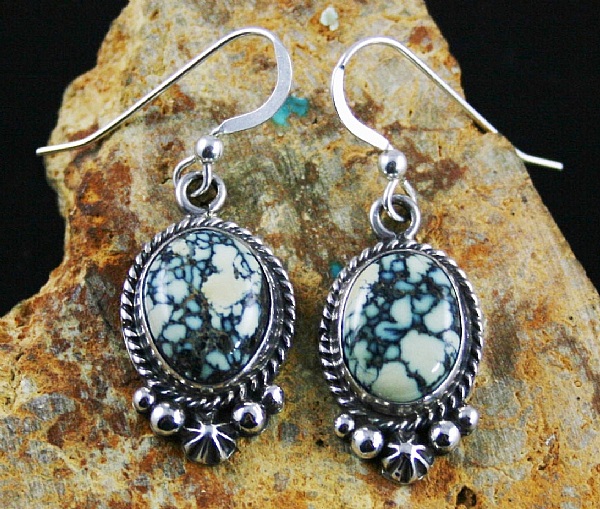
Pieces designed by Andy Cadman can be valuable additions to any collection mainly because of the materials he uses. Some of his prized pieces include earrings that feature precious stones like varascite. His rare gem grade New Lander spiderweb varascite dangle earrings make up a stunning pair, featuring gems that perfectly complement each other with their fine black webbing and stark white details. Andy hand-braided the wire and finished the droplets in a manner that emphasizes the stones.

Another remarkable Andy Cadman creation is a pair of natural rare New Lander Spiderweb varascite stone earrings. The stones come from Nevada, and they are eye-catching with their tan and olive hues complemented with a black and dark blue spiderweb matrix. Andy surrounded each stone with hand-braided wire and finished it with sterling silver round droplets at the bottom for a distinctive look. Andy Cadman carefully chooses the stones he works with, as seen in the rare light colored Easter blue turquoise bracelet. The three brightly colored stones are set with a lovely elegant and traditional design.

When buying Andy Cadman jewelry, always make sure that it comes with a certificate of authenticity that assures you the name of the artist and his tribal affiliation, along with the materials he used and the retail value of the piece.

Monday, 23 May 2016

Know About the Tufa Cast Method of Silver Casting

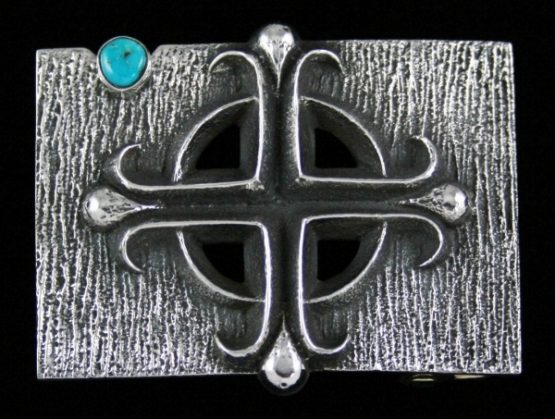
Tufa is a highly porous stone that, when used as a mold for casting, creates a unique texture. Tufa is often used by Native American artists in the creation of beautiful jewelry pieces. It was in the 1800’s when the Navajo artists discovered the tufa method of silver casting.

The labor-intensive tufa cast method requires artists to choose a stone of the desired size, which they then cut into half and rub together to create a flush surface. A hole the size of a cone is then carved on top of the stones (this is called the sprue hole). The sprue hole is where silver will be poured into. To help air escape and to keep the final bracelet cast from bubbling, other holes are carved onto the side of the tufa stone.

Once the mold is done, the artist will carve out the design onto the flat surface inside the hole. The negative space that has been carved away will then be filled with molten silver. Once the carving is done, the tufa stone will be carbonized with the use of a torch. The two halves of the tufa stone will be bound together with clamps.

After the mold has cooled, the hardened piece along with the excess metal in the sprue hole is removed. Some artists will clean and sand the tufa stone to recreate jewelry pieces. The final step in creating jewelry using the tufa cast method is the shaping of the metal. For example, bracelets will be bent to create a curve for the cuff.

The tufa cast method originated with Navajo smiths but has spread to other tribes and passed on to the following generations. Modern artists of make use of furnaces or gas torches to melt silver, unlike before when Navajo silversmiths had to fill up pottery containers with silver coins and then let them melt under embers of fire.